Part numbers · Fitment guide
How to read an Audi OE part number
Every Audi part number tells you the platform, the system, the component and the revision. Learn to read one and you can check fitment yourself in about ten seconds.
Every genuine Audi part carries an eleven-character number that is not random. It is a structured code, and once you can read it you can tell what a part is, roughly what it fits, and whether the one you are looking at is the same component as the one you need.
Take a real example from our catalogue:
8K0  121  251  AL
^^^  ^^^  ^^^  ^^
 |    |    |    revision index
 |    |    sub-group: the specific component
 |    main group: the system
 platform prefix
The four parts
Platform prefix
The first three characters identify the platform the part was first released for. 8K0 is the B8 A4. 8W0 is the B9 A4 and A5. 4M0 is the second-generation Q7. 4E0 is the D3 A8.
A 0 in the third position usually means the part is common across the whole platform. A digit there — 8K5, 8W7 — often narrows it to a body style, such as an Avant or a Cabriolet.
Be careful with the assumption that the prefix equals your car. Volkswagen Group shares heavily, so a part first released on one platform is routinely fitted to another. The prefix tells you where the number originated, not the complete list of what it fits.
Main group
The middle three digits are the system. A few you will meet constantly:
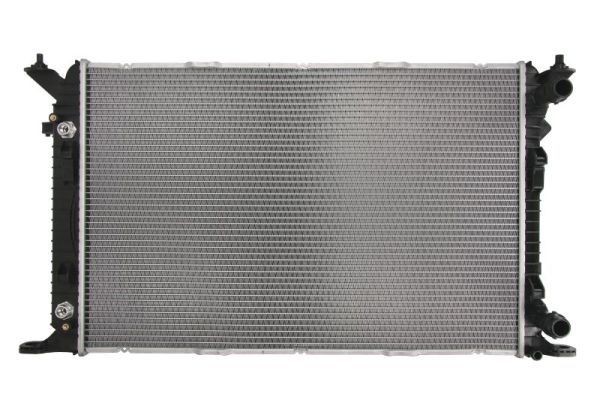
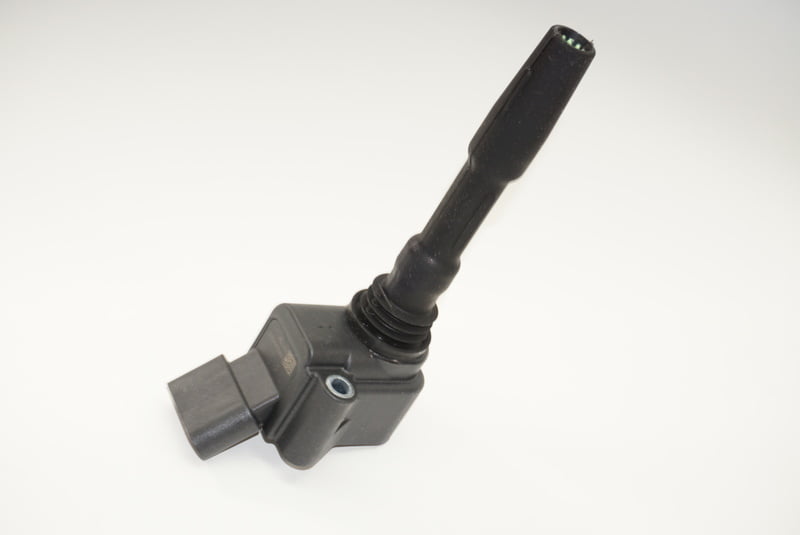
121— cooling: radiators, fans, coolant pipes129/133— air intake and air filters115— lubrication: oil filters, housings, pumps109— timing: chains, belts, tensioners615— brakes: discs, shields809— body side structure905— ignition: coils, plugs, modules601— wheels
Sub-group
The third block is the specific component within that system, and it is where most costly mistakes happen. Inside main group 121, for instance:
251and253are the main radiator212is an auxiliary radiator
Those are not interchangeable, and we have written about that particular trap separately in radiator or auxiliary radiator?.
Revision index
The trailing letters — AL, B, AQ — are the revision. Audi supersedes parts over a model's life to fix a problem, change a supplier or simplify manufacture. A later index is usually the improved part and usually supersedes the earlier one.
Usually. Not always. Some index changes mark a genuine functional difference — a different core thickness, a different mounting, a different connector — and in those cases the two are not interchangeable at all. Never assume a nearby index will fit because the first nine characters match.
Where this actually helps
Reading the number is quickest when you are comparing a listing against the part you removed. If the first nine characters match and only the index differs, you are at least in the right family and it is worth asking. If a sub-group differs, stop — you are looking at a different component regardless of how similar the photos look.
The number on the old part is the single most reliable thing you have. It beats the year, the model, and anything a generic parts lookup tells you.
What the number cannot tell you
It cannot tell you which engine variant you have, and on most platforms that matters. A B8 A4 with the 1.8 TFSI and one with the 3.2 FSI V6 take different cooling packs. The number identifies the part; it does not identify your car.
That is why we ask for the engine code as well as the year and model, and why the fitment data on each product page is keyed to a chassis generation rather than just a model year. There is more on that in chassis codes and engine codes.
If you have the number from the old part and you are still unsure, send it to us with your VIN. Reading these is most of what we do.
Parts in this guide
Fitment guaranteed by engine code. Ask a technician if you are unsure.