Brakes · Buying guide
Audi brake discs: why one costs a hundred and another costs thousands
Discs are sold singly, sub-group tells you which axle, and the price range across the catalogue spans two orders of magnitude for a good reason.
Brake discs generate more pricing confusion than any other part we sell, and most of it comes down to three things people do not expect.
They are sold singly
Almost every genuine Audi disc is priced and supplied as one rotor. Retailers vary — some quote a pair, some quote each, and they do not always say which.
You need two per axle. Always replace them in pairs; a single new disc against a worn one gives you uneven braking and pulls under load.
Our listings are per disc, and every product description says so.
The sub-group tells you the axle
Within main group 615:
- `301` and `302` — front discs
- `601` — rear discs
That is worth checking on the number rather than trusting a listing title, because front and rear are frequently mixed up in source data. Where a number ends in 301 versus 302, that usually distinguishes side or a specification variant rather than axle.
The price range is real
This is the part that surprises people. In our own catalogue, front discs run from around a hundred dollars to several thousand — and both ends are correct.
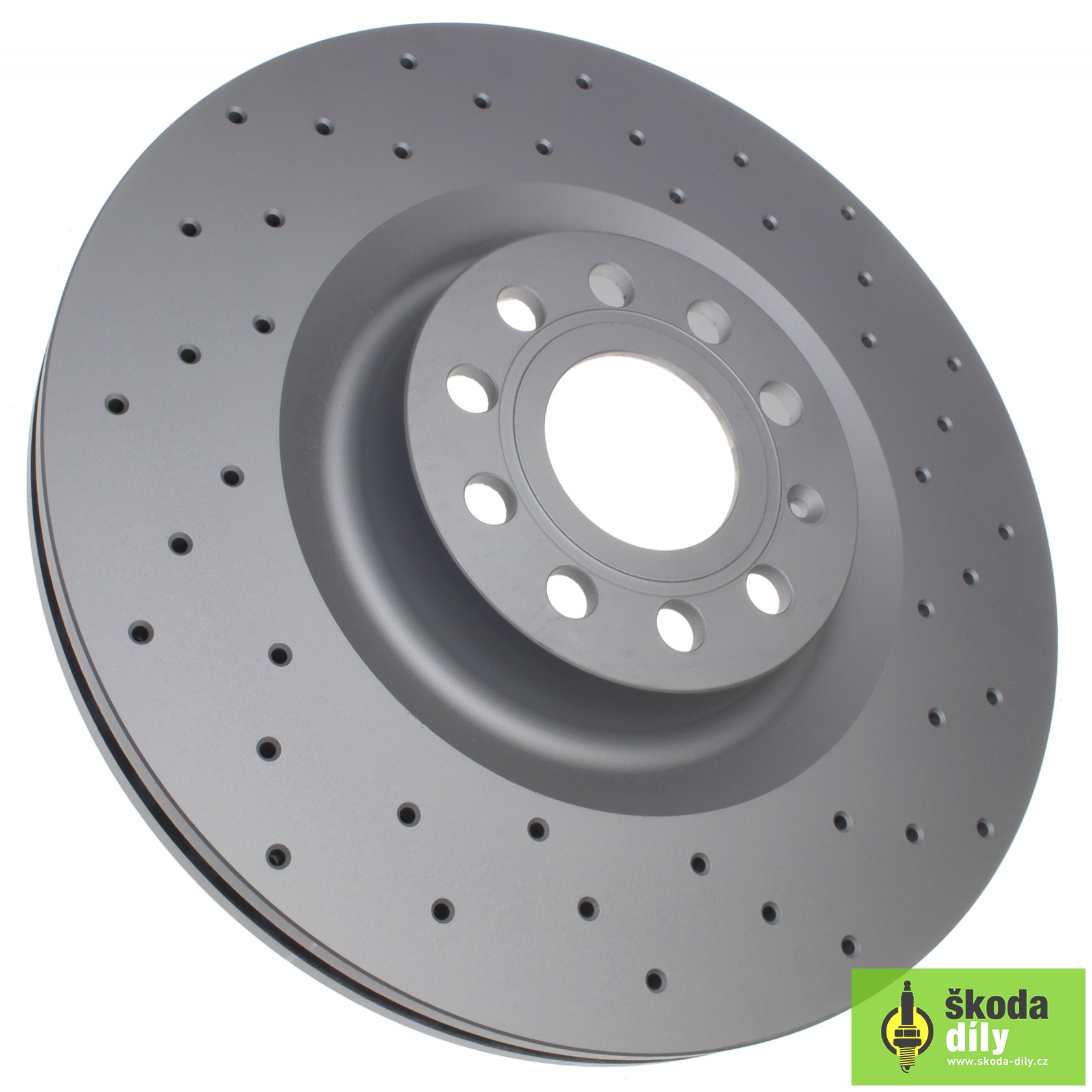
Standard cast iron. The overwhelming majority. A front disc for a PQ35-platform car sits at the affordable end and is an entirely ordinary service item.
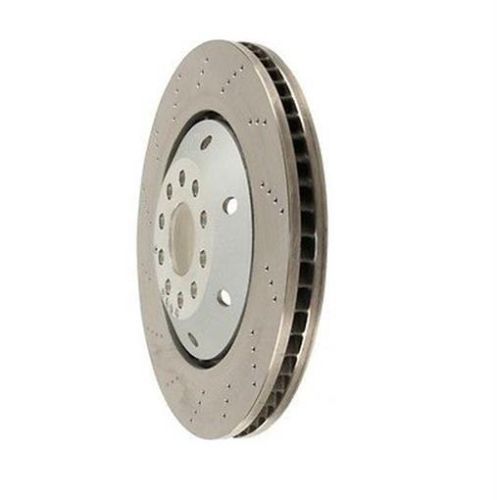
Large performance iron. RS-model discs are physically much bigger — 370 mm and up, with thicker vanes — and are made in far lower volumes. The 370×34 mm front disc used on the 8V RS3 is several times the price of a standard disc, and that is the correct list price rather than an error.
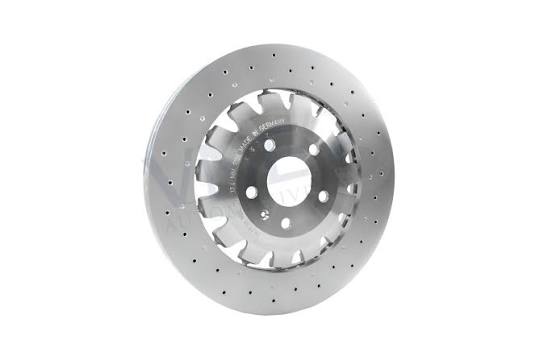
Carbon ceramic. A different material entirely. Ceramic composite discs are made in tiny numbers and cost more than most complete brake jobs. Our 400×38 mm ceramic front disc is the most expensive single item in the catalogue, and that is genuinely what the part lists for.
If your car left the factory with ceramic discs, an iron disc is not a substitute. The carriers, pads and hub geometry differ. Converting in either direction is a full brake system change, not a disc swap.
How to tell what you have
Ceramic discs are usually identifiable by a distinctly different friction surface and, on most cars, by the calliper colour Audi used to signal the option. If you are unsure, the VIN will settle it — and it is worth settling before you order, given the difference.
For iron discs, measure the diameter and the thickness. Both matter, and both are stamped or cast into the disc on most Audi parts. Minimum thickness is also marked; a disc at or below it must be replaced rather than skimmed.
Practical checklist
- Confirm the axle from the sub-group, not the listing title.
- Confirm diameter and thickness against the old disc.
- Order two.
- Replace pads at the same time — new discs against glazed pads waste both.
- Bed them in properly before any hard stop.
The full range is under brake discs and rotors. If the number on your old disc is legible, send it and we will match it exactly.
Parts in this guide
Fitment guaranteed by engine code. Ask a technician if you are unsure.